Blood Type and Rh-Negative 101

Blood Types ~ Explaining Inheritance and Early Paternity Testing


There are eight recognized blood types, they are A, B, AB and O Positives (Rh+) and their negative (Rh-) counterparts;   A-, B-, AB- and O-.  First, we will see how our individual Blood Type "Letter" is directly determined by the blood types of both of our parents.  Next, we will see how the Rh "Factor" we inherit then fits in, to create the other four (Rh-) negative blood types.


We all have 1 Blood Type, but we all carry 2 individual blood type "letters".  The Inheritance Rule says that each parent must give one of their blood type "letters" to each of their children.  As a result, we get our blood type directly from both of our parents!


The four main blood types are A, B, AB and O.

The possible blood type "letter" combinations and their corresponding Blood Types are:

AA

AO

BB

BO

AB

OO

=

=

=

=

=

=

Blood Type A

Blood Type A

Blood Type B

Blood Type B

Blood Type AB

Blood Type O

Examples:

If one parent was AA and the other was BB, the child could only be an AB.

If one parent was AA, and the other was AA, then the child could only be AA.

If one parent was AA, and the other was AB, the child would have a 50/50 chance of being either AA or AB, since they must get one "blood type letter" from each of their parents to create their own blood type.


Enter the Rh Factor


Just as we inherit one blood type "letter" from each parent, we also inherit one Rh Factor from them as well, either Rh+ or Rh-.  Everyone has 2 Rh "Factors" in their blood, they can be either positive (+) or negative (-). The only way to be Rh negative is for both parents to have at least 1 negative (-) "factor" and for you to have receive it from both of them. If you received one Rh+ "factor"  you are Rh+. Only people with two Rh negative "factors" are considered  Rh- blood type.


The possible Rh Factor combinations are:

+ +

+ -

-  -

=

=

=

Rh Positive

Rh Positive

Rh Negative

Examples:

If both parents are ++, then the child must be ++.

If both parents are - -, the child must be - -.

If one parent is ++ and the other parent is +-, there is a 50/50 chance of the child being either ++ or + -.


A child who is (--) cannot come from a parent who is (++), because the child must inherit at least one of those (+'s). Both Parents MUST have at least 1 Negative ( - ) "Setting" to have a Rh Negative Child.


Father

Mother

Child

=

=

=

Rh Positive (+ -)

Rh Negative (- -)

50/50 (- -) or (+ -)

Examples:

If both parents are ++, then the child must be ++.

If both parents are - -, the child must be - -.

If one parent is ++ and the other parent is + -, there is a 50/50 chance of

the child being either ++ or + -.


Early Paternity Testing based on The Inheritance Rule


The Inheritance Rule was considered by law and the medical profession to be an acceptable test when trying to prove paternity and it was used as such until modern day DNA Paternity Testing was introduced and available. Again, this is because if a child was born AA and the mother was AA , they father would have to be AA also.  If the "father" was BB; the child's AA blood would prove that he couldn't be the biological father.  Equally, if a child was born Rh- (- -) to an Rh- (- -) mother, the father could not have two positive (+ +) Rh "factors", or the child would have to be Rh+.  Children must inherit one "blood type letter" and one Rh "factor" from each parent, which in turn directly determines their own blood type.


Other Rare Blood Types

    Du Factor (Duffy Factor)  

The Du factor is related to the "Rh group" of blood factors.  This is important because in some cases where the Rh group is missing (Rh-), the Du factor is may be present. In these situations, the Du factor usually compensates for the lack of other Rh factors.   This causes the blood stream to respond as if it where Rh+. When this situation occurs the person would be reported as Rh- Du+. These women are rarely at risk for Rh problems.  Most often they are treated as if they are Rh+, unless they are getting a transfusion

    Kell Factor
Only about 10% of the population is said to be Kell positive, the other 90 percent of the population are Kell negative.  The Kell factor is rare but is strongly antigenic and only significant effects a small percentage of pregnancies annually.
Anti-Kell antibodies can be formed in response to a Kell+ transfusion into a Kell- person, which can cause severe hemolytic transfusion reaction. This is the most common way Kell sensitization occurs. It is similar to the RH Factor in the sense that a Kell+ baby could also cause sensitization, and subsequent Kell+ babies would be at risk for hemolytic anemia.
Knowing the father's blood type is important!  Statistically, 1 out of 500 people have both genes dominant for the Kell factor, meaning Kell Negative (-).  Similar again, to the Rh Factor, most people have a dominant and recessive gene which can result in a 50% chance of contributing a Kell+ gene to the baby. If both parents are Kell Negative than the baby would have to be Kell- as well.  In cases of previous sensitization of a Kell(-) mother, if the baby's father is Kell+, gene contribution during the type of conception can determine the chances of a Kell+ baby. 
    Other Rare Blood Factors
The factors C and E, are also minor factors which together with the Kell Factor, contributes to only about 2% of all neonatal incompatibility problems related to pregnancy. When a newborn infant develops early jaundice for no apparent reason, it is important to obtain very detailed blood typing of both parents to determine the reason for the infants jaundice. Please note, that these factors are NOT routinely checked during prenatal blood typing studies.
What is Bombay Blood?
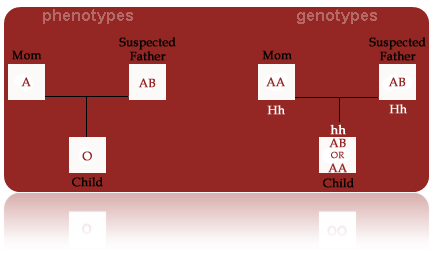
It can be difficult to predict the ABO blood type of children based on the phenotypes of their parents, due to the fact that a third antigen (H) on the surface of red cells can prevent the expected ABO blood type options from occurring. 


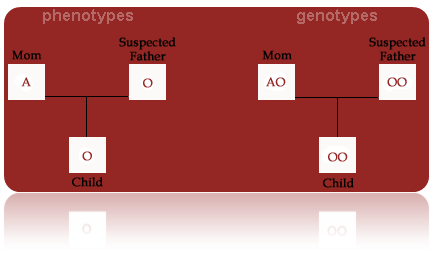
Usually, when an A blood type mother has an O type child, the father is expected to be type O or at least to carry the O allele recessively (OO, AO, or BO genotype).

Phenotypes vs Genotypes and Type O's!
The child has inherited an O allele from both parents.  However, an O blood type child can also be born to parents who do not have the O allele if a recessive form of the allele for the H antigen also is inherited from both parents.
Phenotypes vs Genotypes and Type O's!
The H antigen is a precursor to the A and B antigens.  For instance, the B allele must be present to produce the B enzyme that modifies the H antigen to become the B antigen. As well, the A allele must be present to produce the A enzyme that modifies the H antigen to become the A antigen.  

However, when only recessive alleles for the H antigen are inherited (hh), as in the case above, the H antigen will not be produced and thus, the A and B antigens will not be produced either .  The result is an O phenotype, by default since a lack of A and B antigens is the O type.  This seemingly impossible phenotype result has been referred to as a Bombay phenotype

The ABO blood system is further complicated by the fact that there are two subtypes of type A and two subtypes of type AB.  These are A1,  A2,  A1B,  and A2B.


Additional Resources:

~ First identified in Mumbai, from which the group derives its name, so far there have been   just 179 such cases reported in Indian....read article.

~ A description of Bombay Blood (Reads as Type O+ hh) from Wikipedia...read here.

Indian Blood Group System (In)

The Indian blood group system (In) is named because 4% of the population in India possess it. It is a classification of blood based on the presence or absence of inherited antigens that reside within the CD44 molecule that is expressed on the surface of blood cells.

Click here to learn about CD44

Become a Member - Get More!


Gain access to more in-depth research related to the
Rh-Negative Factor, Autoimmune Conditions
.


Gain access to research, hot topics and new finds in the Autoimmune and Rare Blood Type Populations!

Join the Rh-Negative Autoimmune Connection Community Today!
Just $9.95 for an basic annual membership ~ Click here

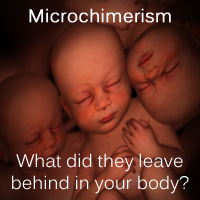
Microchimerism - Do you know what it means?

Could your Autoimmune Condition, Chronic Pain or Illness be somehow

related to your Rh-Negative Blood or Genetic Family Line?


Microchimerism is defined as the presence of a small number of cells that originated from another individual and are therefore genetically distinct from the cells of the host individual. This phenomenon may be related to certain types of autoimmune conditions and diseases.  The cause or mechanisms responsible for this relationship are unclear and the effects are still being researched.


What is know is that during pregnancy, a two-way traffic of immune cells may occur through the placenta. Exchanged cells can multiply and establish long-lasting cell lines that are immunologically active even decades after giving birth.


In humans the most common form of microchimerism is fetomaternal microchimerism which is also known as fetal cell microchimerism or fetal chimerism. This occurs when cells from a fetus pass through the placenta and establish cell lineages within the mother. Reports and studies show that fetal cells have been documented to stay within the mother and multiply for several decades. The exact phenotype of these cells is still unknown, although several different cell types have been identified.  Some of these include various immune lineages, mesenchymal stem cells, and placental-derived cells.


The potential health consequences and or benefits of these cells are currently unknown, but are being researched. One popular hypothesis is that these fetal cells might trigger a graft-versus-host reaction in the mother and could lead to autoimmune disease.
Learn More, click here >
Blood Type Calculator


Blood Type Calculator...by e-Tools Age.


Register Now!

Join the Rh- Registry today! Click Here!

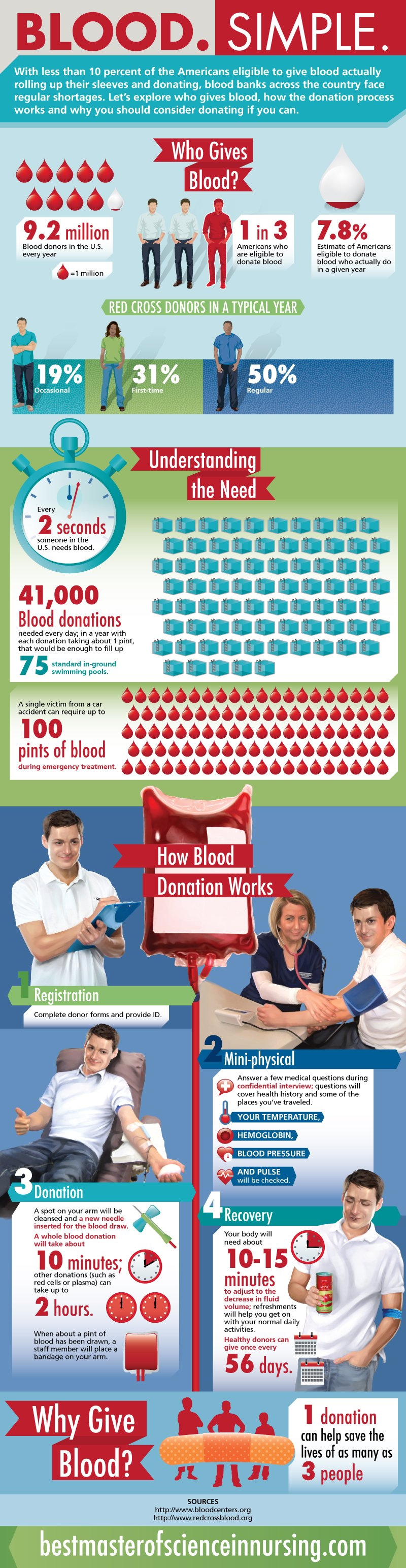
Blood & Donation Facts
  • Your one blood donation can save up to 3 lives!
  • The average adult has 10 to 12 pints of blood in their body.
  • There is no good substitute for blood, especially Rh- Types, the only place to get it is from other humans.
  • Medical research show African Americans have some rare blood traits found in their blood.
  • Medical research now refers to Rh- Type O blood, as being the Universal Donor.
  • Every 3 sec, someone needs a blood transfusion, that equals 23,040 every day.
  • You cannot get AIDS or any other disease by giving blood in a proper donor setting.
  • You can give whole blood every 56 days.
  • You can donate single platelets every 48 hours,or a single plasma donation every 28 days.


Why Rh-Negative Research?
Read more about why it matters
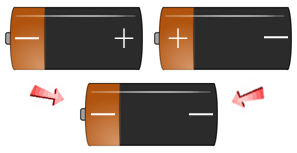
Two Rh+ people CAN have an Rh- baby if BOTH parents carry the RECESSIVE Rh-Negative Factor!
Two Rh+ people CAN have an
Rh-
baby if BOTH parents carry the
RECESSIVE Rh-Negative Factor!


RhDel and RHD1227A

The Rhesus (Rh) blood group is the most polymorphic human blood group system, and it is clinically significant in transfusion medicine. About 15% of Caucasoid people are RhD-negative, whereas in the Asian population, the RhD-negative blood type only occurs in 0.1% to 0.5%. However, approximately 30% of apparently RhD-negative Taiwanese people actually were RhDel.

Read Study, click here >


Human RhDel Caused by a Deletion of 1,013 bp

Between Introns 8 & 9
Including Exon 9 of RHD Gene


View & Print Pdf


Microchimerism, how can it effect your body and health?


Fun Blood Fact...


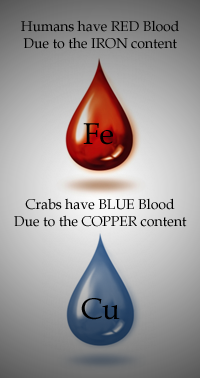
Fun Blood Facts - Copper vs Iron


Detailed Phenotype and Genotype Information and Animations

Detailed Phenotype and Genotype

Information and Animations

Click Here!


Blood Testing Requirements by State for Marriage License.